TRUE TRAINING 116 - Hissy Fits in Weather
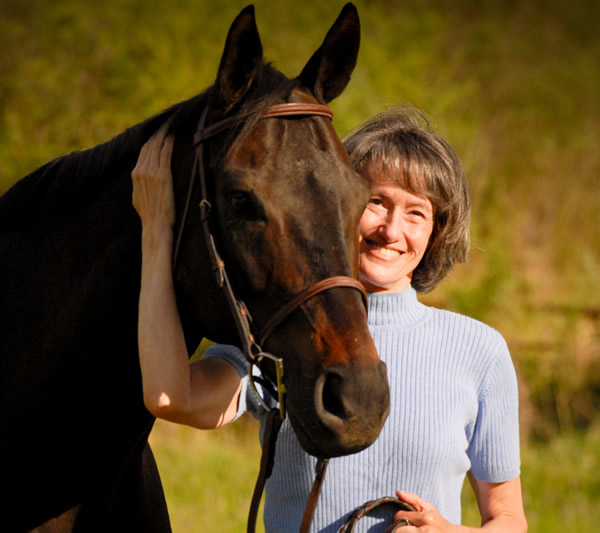
True has never liked bad weather. Wait, let me rephrase: True is a Drama King about the slightest change in weather. He notices light breezes, dislikes strong breezes, and is a nervous wreck in wind. So am I, so the two of us make quite a grumpy pair anytime the wind exceeds about 15 mph. It hurts my ears and concretizes my muscles. It’s best to stay in on those days, as far as we’re concerned.
However, I do ride in all sorts of other weather--heat, cold, rain, snow, ice, sleet, and so on—as long it is not dangerous for the horse. Worse, I take a perverse pride in proving that I am not a princess when it comes to riding in such conditions. Which means I can’t stay in on inclement days without destroying my reputation and becoming known as (ugh) a “fair-weather rider.” So I’m pretty insistent that True needs to learn to manage his disputes with the atmosphere. And I thought he had done pretty well…
…Until the other day. We live in the Rocky Mountains, where the weather changes very quickly. In 2022, it dropped 37 degrees in one hour, just to give you an idea of what I’m talking about. I remember the day well because, of course, I was out riding. But I digress… Last week, I caught True from his 30-acre pasture and began to groom and tack him up. The sun was shining brightly, and it was about 50 degrees—unseasonably warm for this time of year. As I cleaned his feet, I noticed clouds along the northern horizon. Hmmm, probably nothing.
True and I are low maintenance—we get tacked up pretty quickly. But by the time I led Mr. Big Stuff to the mounting block, those clouds had thickened considerably and moved toward us, now only a few miles away. The air felt cooler. I added a jacket and hopped on. Surely there was time enough for one ride, even if we had to shorten it to 45 minutes or so.
But 15 minutes later, the clouds began to spit snow on us. Just one flake here, and another there, nothing serious. The moment the first flake struck a few outer guard hairs on True’s thick fur, he flinched as if his skin had been stuck with a needle. “Oh, fer goodness’sake,” I muttered, “it’s just a couple flakes.”
In another 10 minutes, the snow was falling steadily and it was COLD. I told myself how pretty snowfalls are. How the snow was dry, and the arena footing was fine under the snow (it was). How we could practice straightness by using our tracks in the snow as a guide. How fun it is to beat the elements, to weather a storm, to prevail over Mother Nature. True narrowed his eyes to the growing wind, shook his head several times, and swished his tail in objection.
Five minutes later, he took matters into his own hooves. “What the heck are we doing out here?!” He kicked at my leg pressure when I asked for a second canter. “A canter?! Are you kidding? In this snow?” I insisted. He balked, stopped dead. Those readers who have tried to make a 1500-pound, 17.1 hand horse move forward against his will know that it’s not easy. Wincing at the snow, which was now hardening into pellets, Grumpy-Pants finally stepped forward but every muscle of his body said “I don’t want to.”
I asked again for the canter, and this time he rebelled. Two bucks and a low rear. Lots of head-shaking and dancing hooves. Then a spin toward the gate—which is unusual, he never slows or fusses near the gate. True’s message was crystal clear: “We are going inside now. We are not going to stand out here and get struck by lightning. I know more about weather than you do. Move forward!”
I turned him from the gate and insisted on the canter, just 10 or 12 strides to have my say, then walked and we headed out the gate. I hopped off to untack True near the arena just as thunder began to roll—unusual in winter, but sometimes it happens—and I realized my horse had been right all along. There might be a very early post in this blog, from five or six years ago, when True taught me the same weather lesson while we were out on a giant “dog” walk. I teach frequently that human long-term memory is weaker than horses’, but I don’t seem able to remember that when I’m working alone at home.
We ran for the barn. By the time we got there, True and I were both completely soaked. Lightning had struck nearby twice, the wind was howling, snow was blowing horizontally, and visibility was zero. We huddled in the barn, and I grabbed towels to dry my horse off and a wool cooler to lay over his back. Dry clothes for me were marooned down by the arena, so my punishment for not listening to my horse was to squish around in soggy gloves and jacket until the blizzard slowed down—several hours later.
True was right. Maybe someday I’ll learn.