TRUE TRAINING 118 - Dangers of Supplements and Grass
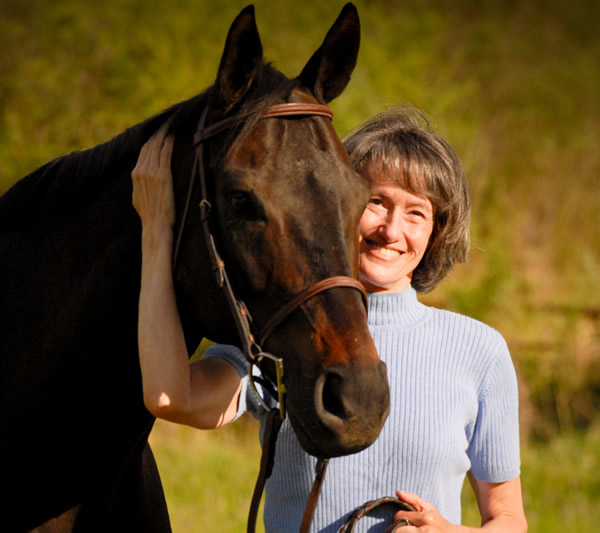
My apologies for not keeping up with my usual twice monthly posts to the True Training Blog. Not to worry—True is fine! While I work on the release of a new book, he is munching happily on sprigs of fresh green grass that are beginning to pop up in his pasture. Which brings me to today’s topic.
Depending on where you live, laminitis can be a common problem in spring and fall due to the high amounts of sugar in the grass. True and I are in the mountains, at high elevation, where daily temperatures range dramatically. At times, it can be 90 degrees Fahrenheit at midday and 20 degrees Fahrenheit that night, for a 70-degree differential over only 24 hours. This wreaks havoc on a horse’s delicate digestive system because so much sugar builds up in the grass. Similar problems can occur at low elevations, too.
True gets a combination of grass hay and fresh grass, with fresh clean water and a salt block on the side. That’s it—no supplements or grains or herbs or goodies except the occasional piece of carrot if he performs some special maneuver. Even that is rare because I train primarily by non-edible reward. These days, True lives in a large stall and outdoor run at night, but is turned out with his buddies in a 30-acre grass pasture during the day.
I avoid supplements for several reasons. First, True is an enthusiastic high-spirited boy. I don’t need to increase his energy levels. He can gallop the pasture all morning or buck to the moon and back just on hay, thank you very much. If your horse is nervous or fresh, check her menu.
Second, fresh grass offers excellent nutrition for horses, and good quality hay can subsitute for it in winter or when the horse is inside. Most supplemental feeds are not necessary except in cases of specific veterinary problems, extreme exercise, or for young horses whose bodies are growing rapidly. Supplements should be fed in small quantities, usually less than the instructions on the bag recommend. Forage—hay or grass—is a horse’s primary digestive need.
Third, it’s not hard to overfeed supplements to the point that certain minerals become elevated in the horse’s blood, risking his general health. I’ve heard vets ask their clients to stop feeding supplements because of that. Often the clients argue, “but it’s only a supplement, it can’t hurt him.” That’s not correct—a supplement can cause harm!
Fourth, well let’s just say it… have you seen the prices of those supps?? Most of that money is exiting the horse’s body in urine. If you worry about nutritional deficiencies, have your hay or grass tested. Local county or cooperative extension offices usually offer testing. It shows exactly how much and what percentages of protein, carbohydrates, vitamins, minerals, and other compounds your horse takes in.
Fifth, it’s very easy to make mistakes when feeding supplements. I’ve seen horses accidentally fed too much of a given supplement, or fed some other horse’s supplement, by mistake. Such errors are common, especially in boarding stables—even the best ones. The average-size horse can founder on as little as two cups of whole corn, for example, if the horse is not accustomed to it. A single experience could lead your horse to chronic laminitis, permanent lameness, or death. Ponies are at greater risk because of their smaller size. Supplements are formulated to taste good, like candy: horses and ponies do not stop eating it when they are full. They can eat themselves to death.
So, what should we do with respect to fresh grass? Build pasture time gradually, starting with half an hour daily or very small amounts of grass (like sprigs that are just emerging from winter). Consider turnout timing—there is less sugar in the grass early in the morning than after 10:00 am. Easy keepers and other horses at risk for laminitis can be turned out in dry lots. Daily exercise helps to overcome the carbohydrate load of high sugar, too.
And what about supplements? Talk to your veterinarian, asking if your specific horse really needs them. Make all feed changes slow and gradual, over the course of a week or two, depending on the size of the change. Measure and deliver supplements personally, each day, to avoid mistakes. And finally, lock up your supplements. If a loose horse gets into them, he could die.